

1. Introduction ١. مقدمة
Digital transformation is frequently conceptualised in terms of technological infrastructure and capital investment. However, this perspective often obscures a more fundamental truth: the most impactful digital initiatives frequently originate in the re-evaluation of quotidian operational processes and the systematic elimination of embedded inefficiencies. This article examines a case study from the insurance sector—the development and implementation of a fully digital Business Mission Management System—to illustrate how a focus on process reengineering, rather than technology alone, can yield substantial improvements in both operational performance and employee experience. The analysis demonstrates that when digital tools are deployed in conjunction with a human-centric design philosophy, even routine administrative procedures can become catalysts for broader organisational change. غالباً ما يُنظر إلى التحول الرقمي في إطار البنية التحتية التكنولوجية والاستثمار الرأسمالي. ومع ذلك، فإن هذا المنظور غالباً ما يحجب حقيقة أكثر جوهرية: وهي أن المبادرات الرقمية الأكثر تأثيراً تنشأ عادةً من إعادة تقييم العمليات التشغيلية اليومية والتخلص المنهجي من أوجه القصور المتأصلة فيها. تبحث هذه المقالة دراسة حالة من قطاع التأمين — وهي تطوير وتطبيق نظام رقمي بالكامل لإدارة مهام العمل (Business Mission Management System) — لتوضيح كيف يمكن للتركيز على إعادة هندسة العمليات، بدلاً من التكنولوجيا وحدها، أن يحقق تحسينات جوهرية في كل من الأداء التشغيلي وتجربة الموظفين. ويظهر التحليل أنه عند نشر الأدوات الرقمية بالتزامن مع فلسفة تصميم تتمحور حول الإنسان، يمكن حتى للإجراءات الإدارية الروتينية أن تصبح حوافز لتغيير مؤسسي أوسع نطاقاً.
2. The Pre-Digital Context: Identifying Operational Inefficiencies ٢. السياق ما قبل الرقمي: تحديد أوجه القصور التشغيلي
Prior to the digital intervention, the organisation's business mission management process was characterised by a predominantly paper-based workflow. Business missions, which are fundamental to insurance operations for field inspections and related activities, were initiated via a manual request process. This required employees to complete paper forms, secure physical signatures for approval, and submit printed documentation for subsequent review and reimbursement processing. قبل التدخل الرقمي، كانت عملية إدارة مهام العمل بالمؤسسة تتميز بآلية عمل تعتمد بشكل أساسي على الأوراق. ومهام العمل، والتي تعد أساسية لعمليات التأمين مثل المعاينات الميدانية والأنشطة ذات الصلة، كانت تبدأ عبر طلب يدوي روتيني. وكان هذا يتطلب من الموظفين ملء نماذج ورقية، والحصول على توقيعات فعلية للموافقة، وتقديم وثائق مطبوعة لمراجعتها لاحقاً ومعالجة صرف التعويضات أو البدلات.
The scale of the operation underscored the magnitude of the inefficiency. With over 500 missions processed on a monthly basis, the organisation's annual paper consumption was estimated at approximately 90,000 printed pages. More critically, the temporal dimension of the process presented a significant challenge: the complete cycle from mission request to final reimbursement spanned between 15 and 20 working days. This protracted timeline created friction for employees, who experienced delays, a lack of visibility into request status, and reliance on manual follow-ups. The system was not merely administratively burdensome; it actively detracted from the employee experience and represented a substantial operational drag on the organisation. وقد أبرز حجم العمليات ضخامة عدم الكفاءة. فمع معالجة أكثر من 500 مهمة عمل شهرياً، قُدر استهلاك المؤسسة السنوي من الورق بحوالي 90,000 صفحة مطبوعة. والأهم من ذلك، شكل البعد الزمني للعملية تحدياً كبيراً: حيث كانت الدورة الكاملة من طلب المهمة وحتى الصرف النهائي للبدلات تستغرق ما بين 15 و 20 يوم عمل. وقد أدى هذا الإطار الزمني الطويل إلى إحداث فجوة وصعوبات للموظفين، الذين واجهوا تأخيرات، وغياب الرؤية الواضحة لحالة الطلبات، والاعتماد على المتابعة اليدوية المستمرة. لم يكن النظام عبئاً إدارياً فحسب، بل كان يقلل بشكل فعال من تجربة الموظف الإيجابية ويمثل عبئاً تشغيلياً كبيراً على عاتق المؤسسة.
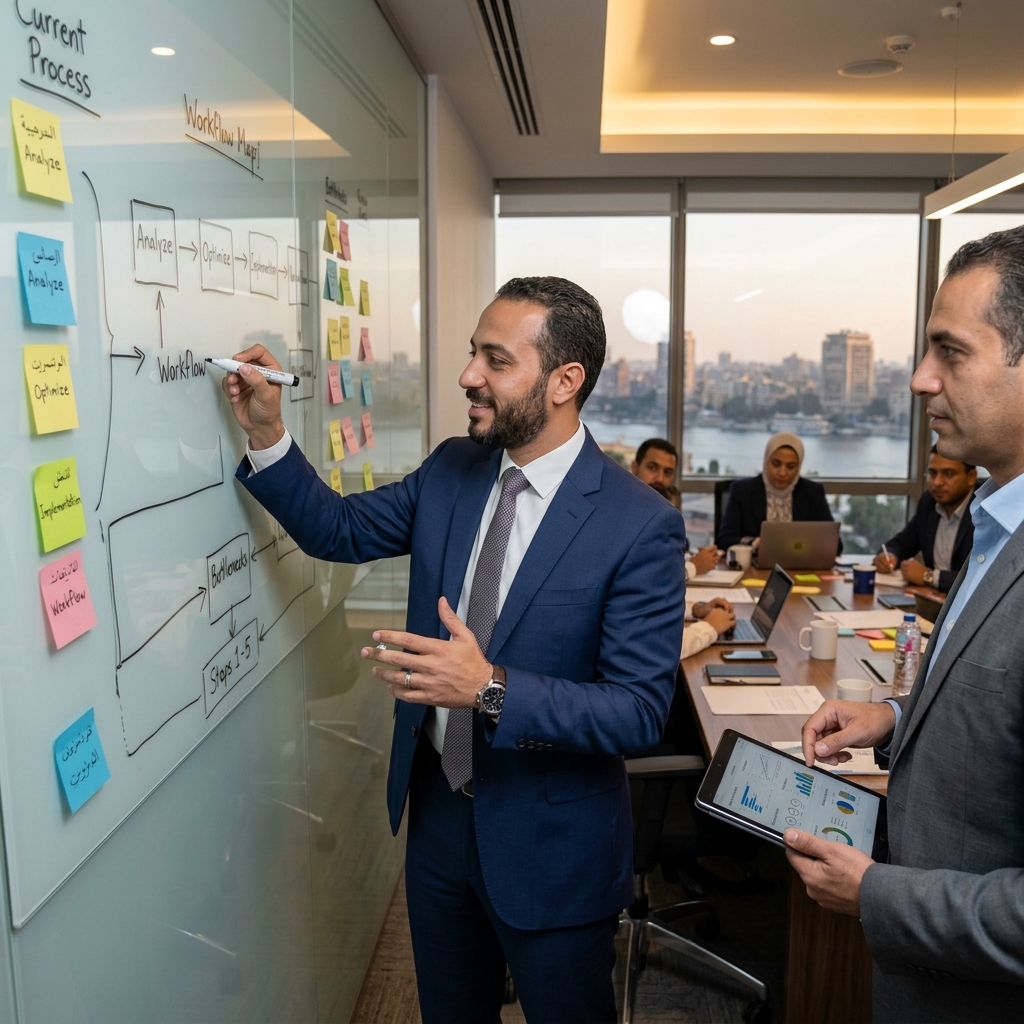
3. Methodology: A Process-Centric Approach to Digital Redesign ٣. المنهجية: نهج متمحور حول العمليات لإعادة التصميم الرقمي
The response to these challenges was not a simple digitisation of the existing paper forms. Rather, the project adopted a methodology grounded in comprehensive process reengineering. The existing workflow was deconstructed and redesigned from the ground up to leverage the capabilities of a digital platform effectively. ولم تكن الاستجابة لهذه التحديات مجرد رقمنة بسيطة للنماذج الورقية القائمة. بل اعتمد المشروع منهجية تقوم على إعادة هندسة شاملة للعمليات. وتم تفكيك سير العمل الحالي وإعادة تصميمه بالكامل من الأساس للاستفادة من إمكانات المنصة الرقمية بشكل فعال.
The core of the solution was the introduction of an end-to-end digital workflow. This new system was architected to integrate several key functionalities: وكان جوهر الحل هو إدخال سير عمل رقمي متكامل من البداية إلى النهاية. وتم تصميم هذا النظام الجديد لدمج عدة وظائف رئيسية:
- Electronic Submission: Employees were enabled to submit mission requests and upload all supporting documents electronically, eliminating the need for physical paper handling. التقديم الإلكتروني: تمكين الموظفين من تقديم طلبات المهام وتحميل جميع المستندات الداعمة إلكترونياً، مما يلغي الحاجة إلى التعامل الورقي المادي.
- Real-Time Tracking: A key feature was the provision of real-time visibility into mission status, allowing employees to track their requests without resorting to administrative follow-up. المتابعة الفورية: تمثلت إحدى الميزات الرئيسية في توفير رؤية فورية لحالة المهمة، مما يسمح للموظفين بمتابعة طلباتهم دون الحاجة إلى المتابعة الإدارية اليدوية.
- Digital Approvals: The approval chain was fully digitised, removing the bottleneck of physical signatures and manual routing. الموافقات الرقمية: رقمنة سلسلة الموافقات بالكامل، مما أزال عنق الزجاجة المتمثل في التوقيعات الفعلية والتوجيه اليدوي للطلبات.
- Integrated Platform: The system connected relevant departments, including HR, Payroll, and Finance, through a single, unified platform, ensuring seamless data flow and coordination across the organisation. منصة متكاملة: ربط النظام الإدارات المعنية، بما في ذلك الموارد البشرية (HR)، والأجور والمرتبات، والمالية، من خلال منصة واحدة موحدة، لضمان تدفق سلس للبيانات والتنسيق عبر المؤسسة.
This methodological sequence—identifying a process bottleneck, redesigning the workflow for digital enablement, and then implementing technology to support the new process—is central to successful transformation. The technology was not an end in itself but an enabler of a more efficient and transparent operational model. إن هذا التسلسل المنهجي — المتمثل في تحديد اختناقات العمليات، وإعادة تصميم سير العمل للتمكين الرقمي، ثم تطبيق التكنولوجيا لدعم العملية الجديدة — هو أمر أساسي للتحول الناجح. لم تكن التكنولوجيا غاية في حد ذاتها، بل كانت عاملاً ممكناً لنموذج تشغيلي أكثر كفاءة وشفافية.
4. Results: Measuring the Impact on Operations and People ٤. النتائج: قياس الأثر على العمليات والأفراد
The implementation of the digital Business Mission Management System yielded quantifiable and significant results across both operational and human dimensions. أدى تطبيق نظام إدارة مهام العمل الرقمي إلى تحقيق نتائج ملموسة وهامة عبر البعدين التشغيلي والبشري.
Operational Efficiency Gains مكاسب الكفاءة التشغيلية
The project's impact on operational metrics was immediate and substantial. كان أثر المشروع على المقاييس التشغيلية فورياً وملموساً.
| Metric المؤشر | Pre-Digital State الحالة قبل التحول الرقمي | Post-Digital State الحالة بعد التحول الرقمي | Improvement نسبة التحسن |
|---|---|---|---|
| Paper Consumption (Annual) استهلاك الورق السنوي | ~90,000 pages | ~9,000 pages | 90% Reduction |
| Processing Time (Cycle) وقت المعالجة (الدورة) | 15-20 Working Days | ~5-7 Working Days | ~65% Reduction |
The 90% reduction in paper use not only lowered material costs but also aligned with broader sustainability objectives. More critically, the 65% decrease in processing time significantly accelerated the entire mission lifecycle, improving the speed of service delivery. The new system also enhanced transparency across the workflow and reduced the administrative effort associated with manual reconciliations and follow-ups. إن الخفض بنسبة 90% في استخدام الورق لم يقلل التكاليف المادية فحسب، بل تماشى أيضاً مع أهداف الاستدامة الأوسع نطاقاً. والأهم من ذلك، أن الانخفاض بنسبة 65% في وقت المعالجة ساهم بشكل كبير في تسريع دورة حياة مهام العمل بالكامل، مما أدى إلى تحسين سرعة تقديم الخدمة. كما عزز النظام الجديد الشفافية عبر سير العمل وقلل الجهد الإداري المرتبط بالتسويات اليدوية والمتابعات.
Employee Experience Transformation تحول تجربة الموظفين
Beyond the efficiency metrics, the project had a profound effect on the employee experience. The digitised process addressed several key friction points that had previously defined the administrative journey. Employees gained visibility into their request status, thereby reducing uncertainty and the need for follow-up communications. The faster and more reliable service delivery directly contributed to increased employee satisfaction, demonstrating that operational improvements and employee well-being are not mutually exclusive objectives. إلى جانب مقاييس الكفاءة، كان للمشروع أثر عميق على تجربة الموظفين. حيث عالجت العملية المرقمنة العديد من نقاط الاحتكاك والصعوبة الرئيسية التي كانت تحدد مسار الرحلة الإدارية سابقاً. واكتسب الموظفون رؤية واضحة لحالة طلباتهم، مما قلل من حالة عدم اليقين والحاجة إلى الاتصالات والمتابعات المستمرة. وساهم تقديم الخدمة بشكل أسرع وأكثر موثوقية بشكل مباشر في زيادة رضا الموظفين، مما يثبت أن التحسينات التشغيلية ورفاهية الموظفين ليست أهدافاً متعارضة.
5. Discussion: Lessons for Sustainable Digital Transformation ٥. المناقشة: دروس للتحول الرقمي المستدام
This case study offers several important insights for organisations pursuing digital transformation initiatives. The primary lesson is that digital transformation is fundamentally about redesigning processes to create value, not simply replacing paper with technology. The success of the project was predicated on a thorough rethinking of the workflow, ensuring that the digital solution addressed the root causes of inefficiency rather than merely automating a flawed process. تقدم دراسة الحالة هذه العديد من الرؤى الهامة للمؤسسات التي تسعى إلى تنفيذ مبادرات التحول الرقمي. الدرس الأساسي هو أن التحول الرقمي يتعلق أساساً بإعادة تصميم العمليات لخلق القيمة، وليس مجرد استبدال الورق بالتكنولوجيا. وقد استند نجاح المشروع إلى إعادة التفكير الشامل في سير العمل، مما يضمن أن الحل الرقمي يعالج الأسباب الجذرية لعدم الكفاءة بدلاً من مجرد أتمتة عملية معيبة.
Furthermore, the project underscores the importance of a focus on the end-user—in this case, the employee. By prioritising features that improved transparency, reduced effort, and accelerated service, the transformation directly enhanced the employee experience. This dual focus on operational excellence and employee satisfaction creates a virtuous cycle: engaged employees are more likely to embrace digital tools and contribute to ongoing process improvements. علاوة على ذلك، يؤكد المشروع على أهمية التركيز على المستخدم النهائي — وفي هذه الحالة، الموظف. ومن خلال إعطاء الأولوية للميزات التي تعمل على تحسين الشفافية وتقليل الجهد وتسريع الخدمة، ساهم التحول بشكل مباشر في تعزيز تجربة الموظفين. ويخلق هذا التركيز المزدوج على التميز التشغيلي ورضا الموظفين دورة إيجابية: فالموظفون المتفاعلون هم أكثر عرضة لتبني الأدوات الرقمية والمساهمة في التحسين المستمر للعمليات.
The findings are consistent with the academic literature on digital transformation, which increasingly recognises that technology adoption is only one component of a more complex socio-technical change. Success depends on the alignment of technology, process, and people. Organisations that neglect any of these elements risk implementing digital solutions that fail to deliver on their potential. وتتوافق هذه النتائج مع الأدبيات الأكاديمية حول التحول الرقمي، والتي تعترف بشكل متزايد بأن اعتماد التكنولوجيا ليس سوى عنصر واحد من تغيير اجتماعي-تقني أكثر تعقيداً. ويعتمد النجاح على المواءمة بين التكنولوجيا والعمليات والأفراد. والمؤسسات التي تهمل أي من هذه العناصر تخاطر بتطبيق حلول رقمية تفشل في تقديم إمكاناتها الكاملة.
Figure 1. A Best-Practice Framework for Sustainable Digital Transformation: From Paper to Platform الشكل ١. إطار أفضل الممارسات للتحول الرقمي المستدام: من المعاملات الورقية إلى المنصات الرقمية


6. Conclusion ٦. الخاتمة
The development of a digital Business Mission Management System in this insurance organisation illustrates the transformative potential of a process-led approach to digital change. By addressing a routine but critical administrative process, the project achieved significant improvements in operational efficiency, including a 90% reduction in paper use and a 65% decrease in processing time. Equally importantly, the initiative positively transformed the employee experience by providing greater transparency, faster service, and reduced administrative burden. يوضح تطوير نظام رقمي لإدارة مهام العمل في مؤسسة التأمين هذه القدرة التحويلية للنهج القائم على العمليات في قيادة التغيير الرقمي. فمن خلال معالجة عملية إدارية روتينية ولكنها بالغة الأهمية، حقق المشروع تحسينات كبيرة في الكفاءة التشغيلية، بما في ذلك خفض استهلاك الورق بنسبة 90% وتقليص وقت المعالجة بنسبة 65%. وبنفس بقدر من الأهمية، أحدثت المبادرة تحولاً إيجابياً في تجربة الموظف من خلال توفير شفافية أكبر، وخدمة أسرع، وتقليل العبء الإداري.
This case demonstrates that digital transformation is not solely the domain of large-scale, high-investment projects. When technology is combined with process reengineering and a focus on employee experience, even seemingly routine processes can become drivers of excellence and organisational change. The fundamental takeaway is that sustainable digital transformation is achieved not by adopting technology for its own sake, but by using it to fundamentally redesign work in a way that creates value for the organisation. وتوضح هذه الحالة أن التحول الرقمي ليس حكراً على المشاريع الكبرى ذات الاستثمارات الضخمة. فعندما تجتمع التكنولوجيا مع إعادة هندسة العمليات والتركيز على تجربة الموظف، يمكن حتى للعمليات الروتينية الظاهرة أن تصبح محركات للتميز والتغيير المؤسسي. إن الفائدة الأساسية المستخلصة هي أن التحول الرقمي المستدام لا يتحقق باعتماد التكنولوجيا لذاتها، بل باستخدامها لإعادة تصميم العمليات بشكل جوهري بما يخلق قيمة حقيقية للمؤسسة.